A storm rolls through River Heights overnight, and by morning there's a massive silver maple leaning hard against your fence — or worse, your roof. Your first instinct might be to grab a chainsaw and handle it yourself. Before you do, there are real city rules, serious physical risks, and Manitoba-specific factors that could turn a DIY weekend project into an insurance nightmare or a trip to the ER. Here is what every Winnipeg homeowner should understand before picking up a saw.
Is It Legal to Remove a Tree Yourself in Winnipeg?
Yes, in most cases you are legally permitted to remove a tree on your own private property in Winnipeg without a permit — but there are important exceptions you must check first. Trees located on city boulevards (the grass strip between the sidewalk and the street) are owned by the City of Winnipeg, not by you, and removing or pruning them without authorization is prohibited. If your property is in a heritage zone or you are removing a tree close to a utility line, additional rules may apply.
There is one more major exception that applies specifically to Manitoba: elm trees. Winnipeg sits at the centre of one of North America's largest urban elm populations, and the province runs an active Dutch Elm Disease management program. Pruning or removing elm trees is restricted to specific times of year — generally outside the beetle-flight season from April 1 to July 31 — and improper handling of infected wood can spread the disease to healthy trees across entire blocks. Before touching any elm, review the Manitoba Government — Dutch Elm Disease Program for current guidelines.
How Dangerous Is DIY Tree Removal in Winnipeg?
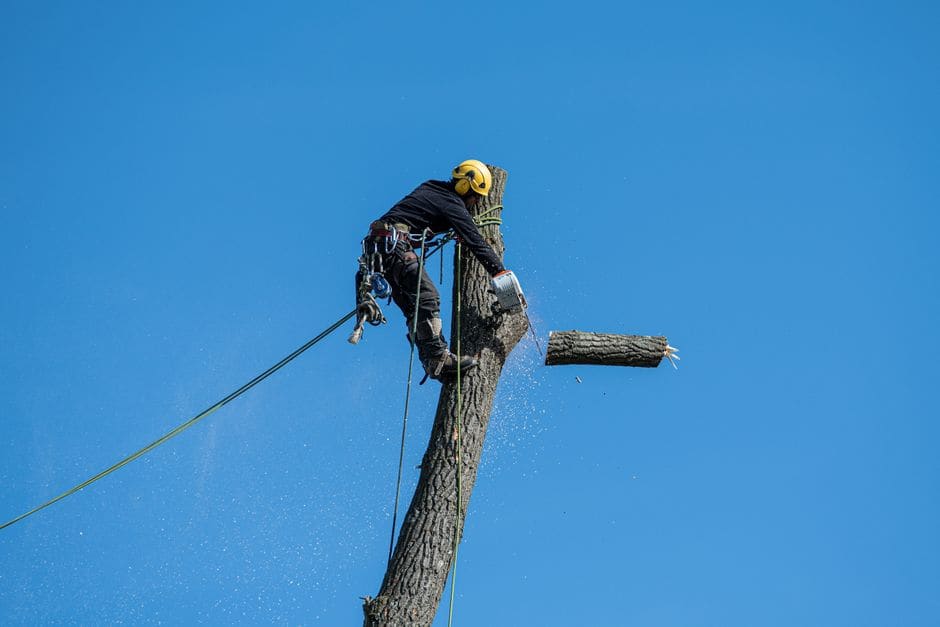
DIY tree removal is one of the most hazardous home projects a Winnipeg homeowner can attempt, and the risk goes up significantly after a storm. A healthy, standing tree in open space is one thing; a storm-damaged tree with a compromised root plate, a split trunk, or a limb already hung up on a structure is an entirely different scenario. These trees are under extreme tension and can move unpredictably the moment a cut is made.
Winnipeg winters add an extra layer of complexity. Repeated freeze-thaw cycles — which are severe on the Prairies — weaken wood at existing cracks and splits in ways that are not always visible from the outside. A trunk that looks solid in October may have internal decay that makes it behave nothing like a healthy tree under a chainsaw. During the spring melt and after summer convective storms, emergency calls for fallen or leaning trees spike across all quadrants of the city, from Transcona to Tuxedo.
Specific risks to keep in mind include:
- Overhead power lines: Many older Winnipeg neighbourhoods have service lines running through tree canopies. Any work within 3 metres of a live line legally requires a qualified utility worker to be present or the line to be de-energized. This is not optional.
- Kickback injuries: Chainsaws used by untrained operators in awkward positions — common when working on a fallen or leaning tree — cause severe lacerations within fractions of a second.
- Widow-makers: Storm damage almost always leaves broken branches suspended in the canopy above. These can drop without warning when the lower trunk is disturbed.
- Root-plate lift: A tree that has already started to uproot can shift suddenly when cut, crushing anything underneath it.
When Can You Safely Handle It Yourself?
There are genuinely manageable DIY situations. Small trees — generally under 15 feet tall with a trunk diameter under 6 inches — that are already on the ground, away from structures, away from utility lines, and not showing signs of rot are the most reasonable candidates for a careful homeowner. Removing a young Manitoba maple sapling from a backyard garden bed, for example, is a very different job than taking down a storm-damaged 60-year-old American elm in Fort Garry.
If the following are all true, a careful DIY removal may be reasonable:
- The tree is small and already felled or fully on the ground.
- There are no utility lines within fall distance.
- The tree is not an elm (due to provincial DED regulations).
- It is not on a city boulevard or in a heritage zone.
- You have appropriate safety gear: chainsaw chaps, a hard hat with face shield, hearing protection, and steel-toed boots.
If even one of those conditions is not met, the job has crossed into professional territory. Our team handles tree removal in Winnipeg for exactly these situations — storm emergencies, large trees, trees near structures, and anything involving elms or power lines.
What Does Professional Tree Removal Cost in Winnipeg?
Professional tree removal in Winnipeg typically ranges from $300 to $2,500 or more depending on tree size, location, and complexity. Emergency storm-response calls — where crews mobilize same-day to clear a tree off a roof or driveway — carry a premium, often 20–50% above standard rates, reflecting after-hours work and the added hazard of storm conditions.
| Tree Size / Scenario | Typical Winnipeg Cost Range |
|---|---|
| Small tree (under 20 ft, open yard) | $300 – $600 |
| Medium tree (20–40 ft, near fence) | $600 – $1,200 |
| Large tree (40+ ft, near structure) | $1,200 – $2,500+ |
| Emergency storm response (same-day) | Add 20–50% to base price |
| Stump grinding (add-on) | $100 – $400 |
These figures are general estimates. A proper quote requires an on-site assessment, since access, soil conditions, proximity to structures, and debris volume all affect the final price.
Storm Damage? Get a Same-Day Assessment in Winnipeg
Whether a tree came down overnight or you have a dangerous lean you need evaluated before the next storm, get a free, no-obligation quote from a local Winnipeg crew today.
Get My Free QuoteFrequently Asked Questions
Do I need a permit to cut down a tree on my own property in Winnipeg?
For most trees on private residential property in Winnipeg, no permit is required. However, if the tree is on a city boulevard, near protected heritage structures, or is an elm subject to provincial disease regulations, you will need to check with the City of Winnipeg Urban Forestry division or Manitoba Agriculture before proceeding.
Can I cut down an elm tree on my property in Manitoba?
You can remove an elm tree on your private property, but Manitoba's Dutch Elm Disease program restricts when elm wood can be pruned or cut — generally no work is permitted between April 1 and July 31 due to beetle activity. Infected elm wood must also be disposed of properly; it cannot simply be left in a pile or chipped at home.
Who is responsible if a neighbour's tree falls on my property during a Winnipeg storm?
In most cases under Manitoba law, your own homeowner's insurance covers damage caused by a fallen tree on your property, even if the tree originated from a neighbour's yard — unless you can prove the neighbour was negligent (for example, they were warned the tree was dead or diseased and did nothing). Always document the damage thoroughly and contact your insurer immediately after the event.
What should I do immediately after a tree falls on my house in Winnipeg?
First, evacuate anyone from the affected area and do not re-enter rooms where the structural integrity is in question. Call 911 if there is any immediate danger, such as a gas leak or downed power line, and contact Manitoba Hydro if lines are involved. Once the scene is safe, document the damage with photos before touching anything, then call your insurance provider and a licensed tree removal company for an emergency assessment.
How close to a power line can I trim a tree myself in Winnipeg?
You should not perform any tree trimming within 3 metres (approximately 10 feet) of an energized power line — this is a safety requirement enforced by Manitoba Hydro. Work in that zone must be done by a qualified line-clearance arborist or completed after Manitoba Hydro has de-energized the line. Attempting it yourself risks electrocution and serious property damage.