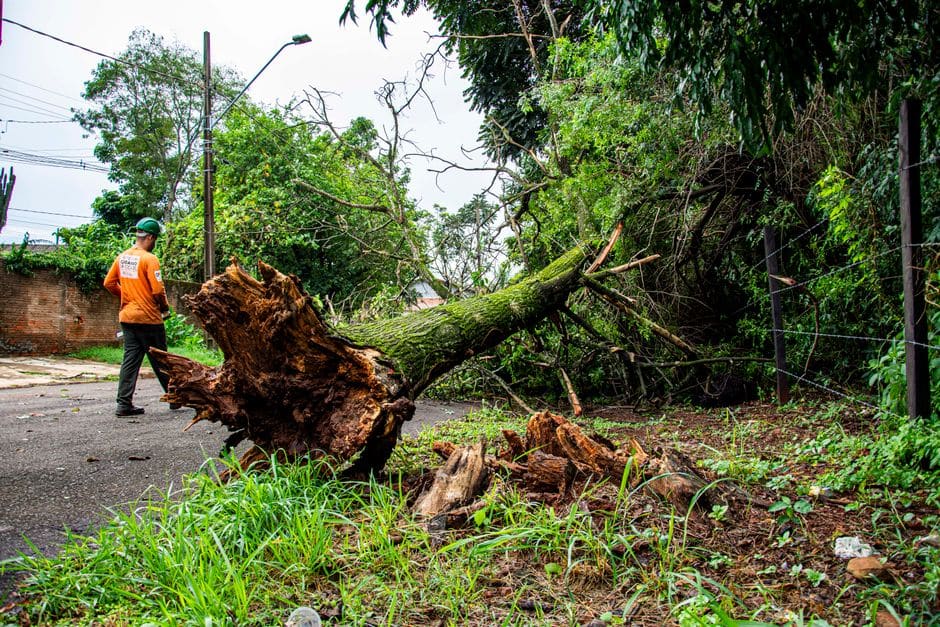
Winnipeg's storm season can turn a healthy elm or Manitoba maple into a hazard overnight. Whether it's a June derecho tearing through River Heights, a late-August thunderstorm dropping a limb onto a fence in St. Vital, or a wet October snowfall snapping a spruce over a back deck in Charleswood, storm-damaged trees are a regular reality for homeowners across the city. Knowing what happens during an emergency tree removal — from that first panicked phone call to the final sweep of your yard — takes most of the stress out of a genuinely difficult situation.
What Happens the Moment You Call for Emergency Tree Removal in Winnipeg?
When you call a certified arborist for emergency tree removal in Winnipeg after a storm, a crew will typically arrive within a few hours for life-safety situations — faster if a tree has fallen on your roof, is blocking a public road, or has downed a power line nearby. The dispatcher will ask you a few quick questions: Is the tree touching the house? Are power lines involved? Is anyone injured or in immediate danger? These answers determine how quickly a crew mobilizes and what equipment they bring. For non-life-threatening situations — a split trunk leaning over a fence, or a large limb resting on a garden shed — same-day or next-morning response is the normal timeline.
Once on site, a certified arborist assesses the tree before any cutting begins. They look at the lean angle, root plate condition, any contact with structures, and whether the root zone or trunk shows signs of pre-existing decay that may have made the tree vulnerable to the storm in the first place. This assessment drives the removal plan — it is not skipped just because the situation is urgent.
How Much Does Emergency Tree Removal Cost in Winnipeg After a Storm?
Emergency tree removal in Winnipeg typically ranges from $800 to $3,500 or more depending on tree size, location, and complexity — with an emergency surcharge of roughly 20 to 50 percent added on top of standard removal rates to account for after-hours callouts, rapid mobilization, and increased crew risk. A mid-sized Manitoba maple that has split and fallen into a backyard with good access sits at the lower end of that range. A large American elm leaning against a two-storey home in Wolseley or a multi-stem spruce pinned against a garage in Transcona — where rigging, cranes, or tight access is required — sits at the higher end.
| Scenario | Typical Cost Range (Winnipeg) | Notes |
|---|---|---|
| Small tree or large limb, open yard | $400 – $900 | Emergency surcharge may apply |
| Medium tree (8–16 inch trunk), standard access | $800 – $1,800 | Includes debris removal |
| Large tree on or near structure | $1,800 – $3,500+ | Crane or lift equipment often needed |
| Stump grinding (add-on) | $150 – $400 | Priced per stump diameter |
| After-hours / weekend emergency | 20 – 50% surcharge | Applied to base removal cost |
Check your home insurance policy before you pay anything. Many Manitoba homeowners are surprised to learn that storm-related tree removal — particularly when the tree has damaged a structure — is covered under their property insurance, subject to a deductible. Document everything with photos before any cutting begins, and ask the arborist for an itemized invoice.
The Step-by-Step Process: What Crews Actually Do on the Day
Understanding the sequence of work helps you know what to expect and how long to stay out of the work zone.
1. Site Safety Assessment and Utility Check
Before any chainsaw starts, the crew establishes a drop zone and identifies all hazards — overhead power lines, buried utility lines, structures, vehicles, and bystanders. If the storm has brought any lines down near the tree, Manitoba Hydro must be contacted before work can proceed safely. Crews will not work under live lines.
2. Limbing and Sectional Cutting
Rather than dropping the whole tree at once, arborists remove branches systematically from the outer canopy inward, lowering larger sections with ropes and rigging to control where wood lands. In tight Winnipeg yards — especially older neighbourhoods like Crescentwood, Armstrong's Point, or Scotia Heights where lot lines are close and mature trees are large — this controlled sectional approach is standard practice, not an upsell.
3. Trunk Removal and Chipping
Once the crown is cleared, the trunk is cut into rounds and either hauled away or left for firewood if you prefer. A wood chipper handles the brush. Most crews leave your yard clear of debris; confirm this is included in your quote, as some base prices cover cutting only.
4. Stump Grinding
Stump grinding is usually scheduled as a second visit unless a grinder is already on the truck. The grinder chews the stump 6 to 10 inches below grade, producing a pile of wood chips you can use as mulch or have hauled away. If the tree was an American elm, there are additional considerations — see below.
Can You Do Anything Before the Crew Arrives?
There is useful preparation you can do while waiting for your arborist — and a few things you absolutely should not do. Clear people and pets from the area around the fallen or leaning tree and keep them well back. Move vehicles if it is safe to do so. Take photos from a safe distance for your insurance claim. If the tree is on your roof, do not go up to inspect damage yourself. Do not attempt to cut limbs under tension — a branch pinned under a tree trunk stores enormous energy and can spring violently when cut. Leave all cutting to the crew.
For a comprehensive look at what full-service tree removal involves beyond the emergency context — including seasonal scheduling, permit considerations, and how to evaluate arborist credentials — visit our Winnipeg tree removal service page.
Need Emergency Tree Removal in Winnipeg Right Now?
Get connected with a local certified arborist who can assess your situation and give you a clear, honest quote fast — no obligation.
Get My Free QuoteFrequently Asked Questions
Do I need a permit to remove a storm-damaged tree in Winnipeg?
The City of Winnipeg does not currently require a permit to remove a tree on private property, but trees on boulevards (the grass strip between the sidewalk and the street) are city property and cannot be removed without authorization from the City's Urban Forestry division. If you are unsure whether your tree is on private or city-owned land, check with the City of Winnipeg before any work begins.
Will my home insurance cover emergency tree removal after a Winnipeg storm?
Most standard Manitoba home insurance policies cover the cost of removing a tree that has fallen onto and damaged an insured structure — such as your roof, fence, or garage — subject to your deductible. Removal of a tree that fell in the yard but caused no structural damage is generally not covered. Always photograph the damage before work starts and request an itemized invoice from your arborist to submit with your claim.
How do I know if my tree is genuinely an emergency or if it can wait until morning?
Treat it as an immediate emergency if the tree or a major limb is resting on your roof, has brought down or is touching power lines, is blocking a public road or alley, or is visibly shifting and at risk of falling further. A leaning tree with its root plate partially lifted but not in contact with any structure can usually be safely assessed at first light, but you should still call an arborist the same evening to get on the schedule.
What should I do if a storm-downed tree in Winnipeg is touching a power line?
Do not touch the tree or any wire, and keep everyone — including pets — well away from the area. Call Manitoba Hydro's emergency line (1-888-624-9376) immediately so they can disconnect or make the line safe before any arborist crew approaches. No certified tree service will begin cutting a tree that is in contact with an energized line.
How long does emergency tree removal in Winnipeg typically take?
A single mid-sized storm-damaged tree with reasonable access usually takes a crew of two to three people between two and four hours to fully remove and chip on the day of the job. Trees that require rigging into tight spaces, crane assistance, or involve damage to a structure can take a full day. Stump grinding is almost always a separate appointment scheduled within the following week once the ground around the stump has stabilized.