A heavy wet snowfall, a Manitoba thunderstorm, or simply a rotten trunk giving way — whatever the cause, a fallen tree landing on your fence is one of those situations where neighbours suddenly find themselves in an awkward conversation about money. If you're searching "tree fell on fence who is responsible Winnipeg," you're not alone, and the answer is more nuanced than most people expect. Winnipeg has its own tree bylaws, its own boulevard ownership rules, and a climate that makes this scenario happen more often than it does in milder Canadian cities. Here is what you actually need to know.
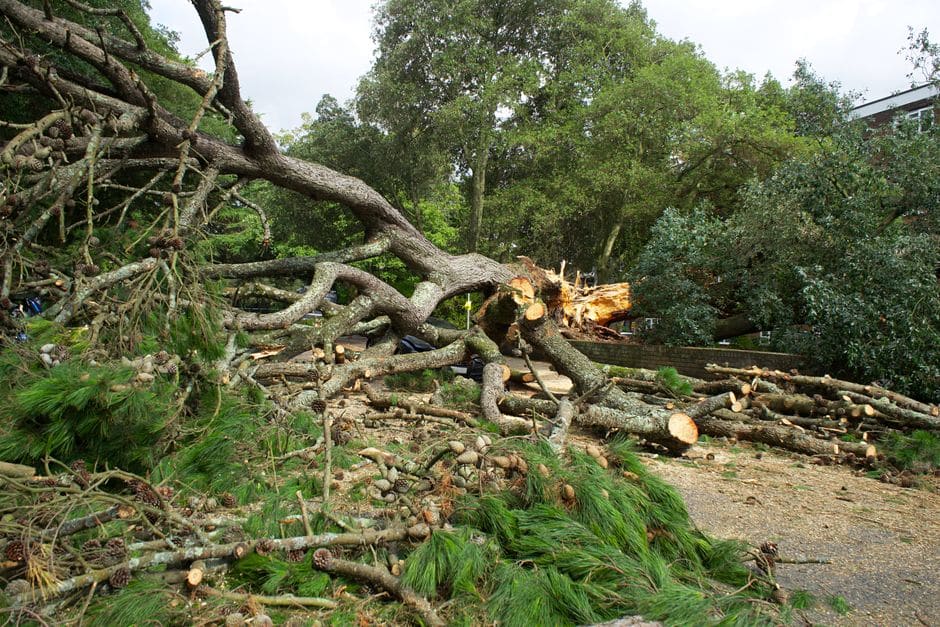
Who Is Responsible When a Tree Falls on Your Fence in Winnipeg?
In most cases in Winnipeg, the owner of the property where the tree was rooted bears responsibility for the damage — but only if that tree was in a visibly diseased, dead, or hazardous condition and the owner knew (or reasonably should have known) about it. If a healthy tree falls due to an unforeseeable storm event, Manitoba common law generally treats it as an act of nature, meaning your own home insurance policy is typically the first line of coverage for repairing your fence, regardless of which yard the tree came from. This is the single most important distinction homeowners miss: negligence matters.
What this means in practice: if your neighbour's elm was clearly dead, leaning toward your property, and you notified them in writing before it fell, you have a much stronger case for holding them liable. If a healthy Manitoba oak snapped during one of Winnipeg's notorious derecho wind events, you will likely be dealing with your own insurer. Document everything — photos of the tree before and after, any written communication with your neighbour, and the condition of your fence.
What If the Tree Came from the City Boulevard?
Boulevard trees in Winnipeg are owned and maintained by the City of Winnipeg, not the adjacent homeowner — so if a boulevard tree falls on your fence, the City may be liable, but again only if it can be shown the tree was in a known hazardous condition and the City failed to act. The City of Winnipeg — Trees, Boulevards & Urban Forestry department maintains an inspection and complaint system; if you reported a hazardous boulevard tree and have proof of that report, your claim against the City is significantly stronger than if the tree appeared healthy before the storm.
If you are unsure whether a tree on or near your property line is a boulevard tree, a private tree, or sits on City parkland, an arborist consultation is the most reliable way to get a professional opinion on ownership, condition, and your options before anything happens.
The Property Line Question: Whose Tree Is It Really?
Winnipeg neighbourhoods like River Heights, Transcona, and St. Vital have mature tree canopies where roots and branches routinely cross property lines. Manitoba law generally assigns ownership of a tree to whoever's land the trunk originates from at ground level. If the trunk sits exactly on the property line, the tree may be considered jointly owned — and so is the shared liability for damage it causes.
This gets particularly complicated with fence-line trees in older Winnipeg neighbourhoods where fences were built decades ago without a survey. If there is any doubt about the actual property line, pulling your Certificate of Title or hiring a surveyor before making a liability claim is worth the cost. Making assumptions about where the line is — and being wrong — can undermine your insurance claim or any legal action you pursue.
How to Handle the Fence Repair After a Tree Falls in Winnipeg
Once you have assessed who is responsible, the practical steps are largely the same regardless of fault. First, make the area safe — do not try to cut a large tree off a fence yourself if the trunk is under tension or the fence posts have shifted, as a compressed fence rail or leaning post can cause serious injury when suddenly released. Contact a licensed tree removal company to clear the debris safely before any fence repairs begin.
Once the tree is removed, document the damage thoroughly with photos before any repairs are touched. If your neighbour agrees to share costs or cover the repair, get that agreement in writing. If you're going through your insurer, they will typically cover fence repair minus your deductible and may pursue the negligent neighbour's insurer themselves through a process called subrogation — meaning you do not necessarily need to take your neighbour to small claims court yourself.
For the fence repair side of things, Fence Installation Winnipeg is a useful local resource for understanding typical repair costs and finding qualified fence contractors in the city — helpful context when you are preparing an estimate for an insurance claim.
Winnipeg's Climate and Why This Happens More Than You'd Think
Winnipeg's combination of extreme temperature swings, heavy spring wet snow, and periodic high-wind events makes tree failure a genuinely common occurrence. The freeze-thaw cycles that run through October to April put repeated stress on root systems. Dutch elm disease, which remains a serious concern across Winnipeg, leaves dead elms standing in yards across the city — a known hazard that is specifically one the City of Winnipeg tracks. If your property or your neighbour's has an elm that has not been inspected recently, that is a situation worth addressing proactively rather than waiting for a storm to make the decision for you.
| Scenario | Likely Responsible Party | First Step |
|---|---|---|
| Healthy neighbour's tree falls in a storm | Your own home insurance | File a claim with your insurer |
| Visibly dead/diseased neighbour's tree falls | Neighbour (if negligence proven) | Document condition; contact neighbour's insurer |
| Boulevard tree falls on your fence | City of Winnipeg (if negligence proven) | Contact 311; file a claim with the City |
| Tree on the property line falls | Shared / both property owners | Consult an insurer or legal advisor |
| Your own tree falls on your fence | You | File a home insurance claim |
Need a Tree Removed Before It Becomes a Bigger Problem?
Get a free, no-obligation quote from our Winnipeg tree removal team and find out exactly what it will cost to safely remove a hazardous tree from your property.
Get My Free QuoteFrequently Asked Questions
Does Winnipeg require a permit to remove a tree that fell on my fence?
If the fallen tree is on private property, you generally do not need a City permit to remove it, but you should confirm this with the City of Winnipeg since rules can change and certain protected or boulevard trees have specific requirements. If the tree is a boulevard tree or sits on City-owned land, only the City can authorize and carry out its removal — you cannot remove it yourself.
Can I trim my neighbour's tree branches that hang over my fence in Winnipeg?
Under Manitoba common law, you have the right to trim branches and roots that encroach onto your property up to the property line, but you are generally required to return the cuttings to your neighbour and cannot trim in a way that would kill or seriously damage the tree. It is strongly recommended to speak with your neighbour first and consult an arborist before cutting, since an improperly pruned tree can become a hazard and shift liability back to you.
Will my Winnipeg home insurance cover a fence damaged by a fallen tree?
Most standard Winnipeg home insurance policies cover fence damage caused by a fallen tree as a named peril, subject to your deductible — regardless of where the tree came from, as long as the event was sudden and accidental. However, some policies have specific limits on detached structure coverage (which includes fences), so review your policy or call your broker to confirm your coverage amount before filing a claim.